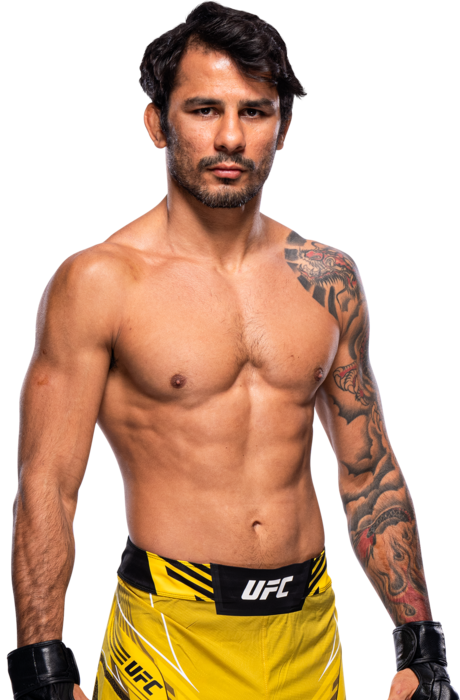
Born in Rio de Janeiro on April 16, 1990, Pantoja was raised by his mother after his father left the family, a detail he shared after winning the title at UFC 290, per Bloody Elbow. He landed on the UFC roster in 2017 after appearing on The Ultimate Fighter, where he first crossed paths with Kai Kara-France. The real turn, by his own account, came when he joined American Top Team in Coconut Creek, Florida. “I just started believing I could be a UFC champion only three or four years ago when I came to American Top Team,” he told CBS Sports. The gym, along with long-time training partners, sharpened a brawler with a jiu-jitsu black belt into a champion.
Pantoja fights the way the nickname suggests. He pressures, clinches, hunts the back, and finishes. He lands 4.38 significant strikes per minute at 54.6% accuracy, but the grappling is the calling card: jiu-jitsu off scrambles, chain wrestling that never lets up, and one of the best back-take games at 125. UFC.com flagged a clear refinement in his recent work, where he leaned harder on grappling instead of the firefights that once defined him. The weakness, exposed at UFC 301 against Steve Erceg and finally at UFC 323, was a willingness to stand and trade when the safer path was on the canvas.
The defining run started at UFC 277 in 2022, where he submitted Alex Perez in the first round. He then beat Brandon Moreno by split decision at UFC 290 to take the belt, outlasted Brandon Royval at UFC 296, edged Erceg at UFC 301, and submitted Kai Asakura in the second round at UFC 310. At UFC 317 in June 2025, he choked out Kara-France in the third for his fourth defense, tying him with Demetrious Johnson for the most title wins in flyweight history. The reign ended fast when Joshua Van knocked him out 26 seconds into their UFC 323 meeting.
Pantoja is a former champion still ranked at the top of the flyweight pile, and he’s been open about wanting to be remembered among the pound-for-pound best before he retires, as he told CBS Sports. A rematch with Van or a contender’s bout sits ahead. The question is whether a 36-year-old can rebuild what took him a decade to put together, in a division that has finally found a younger answer.